
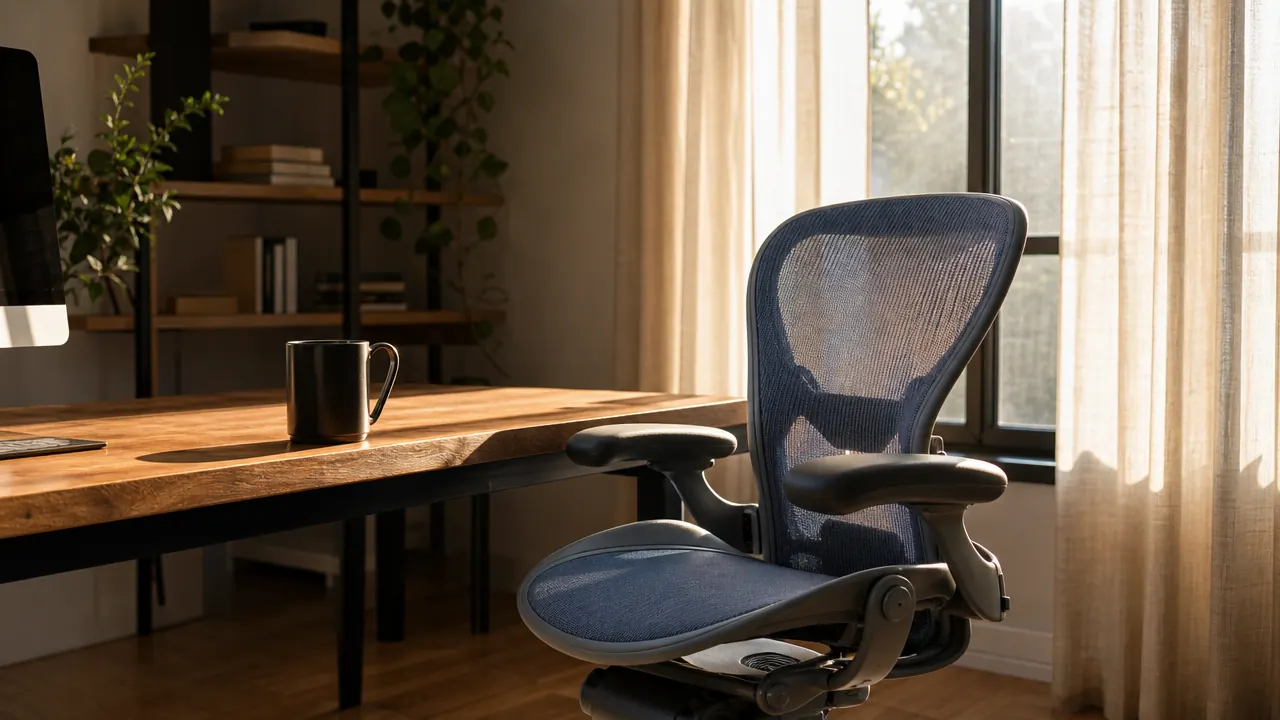
My lower back had been giving me quiet signals for the better part of a year. Not sharp pain, just a steady dull ache that started around hour three and settled in by the time I stepped outside to tend the garden between calls. I blamed the standing desk converter, then the monitor height, then my posture. The chair was an afterthought, a padded executive thing I had picked up years ago that looked professional and did nothing much else. When I finally swapped it out for the GABRYLLY ergonomic mesh chair in December of last year, I promised myself I would sit in it for six full months before saying anything about it. That time is up.
I am 5'10", about 195 pounds, and I work from home full-time doing consulting work that keeps me at the desk from roughly 8 AM to 5 PM most weekdays. Video calls in the morning, deep-focus writing in the afternoon. My setup is a corner desk with a standing converter, but honestly I sit about 80 percent of the time. The GABRYLLY has been my primary chair for every one of those days since I set it up in mid-December.
The Quick Verdict
Solid lumbar support and genuinely useful 3D armrests make it a strong choice for tall-to-average home office workers who sit long hours, but the headrest takes real patience to dial in and the seat cushion firmness is not for everyone.
Amazon Check Today's Price →If your back starts aching before lunch, your chair is likely the problem, not your posture.
The GABRYLLY has 4.5 stars across 1,470 reviews and ships with a 2-year warranty. Check today's price and availability on Amazon before the next size variant sells out.
Amazon Check Today's Price on Amazon →How I Have Used It
Setup took about 45 minutes. The instructions are mostly pictures, which works fine, but the lumbar support attachment had me second-guessing myself until I realized the depth dial was looser than I expected. Once the back was on and the armrests were clicked into their towers, the chair felt immediately substantial. The mesh back has no give in a bad way. It flexes a little as you lean, but it holds its shape rather than buckling.
I spent the first two weeks adjusting. The seat height was simple, a lever under the right side, and I settled at about 18.5 inches from the floor with my feet flat. The armrests are where I noticed a real difference from my old chair. They pivot inward and adjust forward-back in addition to height, which let me set them close enough that my elbows actually rested without my shoulders hunching. That single change reduced my neck tension noticeably within the first week.
After two months the adjustments became second nature and I stopped thinking about the chair, which is roughly the right outcome. By month four I had figured out the lumbar knob well enough to shift it slightly during long afternoon sessions when my back needed a nudge forward. That kind of mid-day micro-adjustment is something I never had with the old padded chair.
Lumbar Support: The Part That Actually Matters
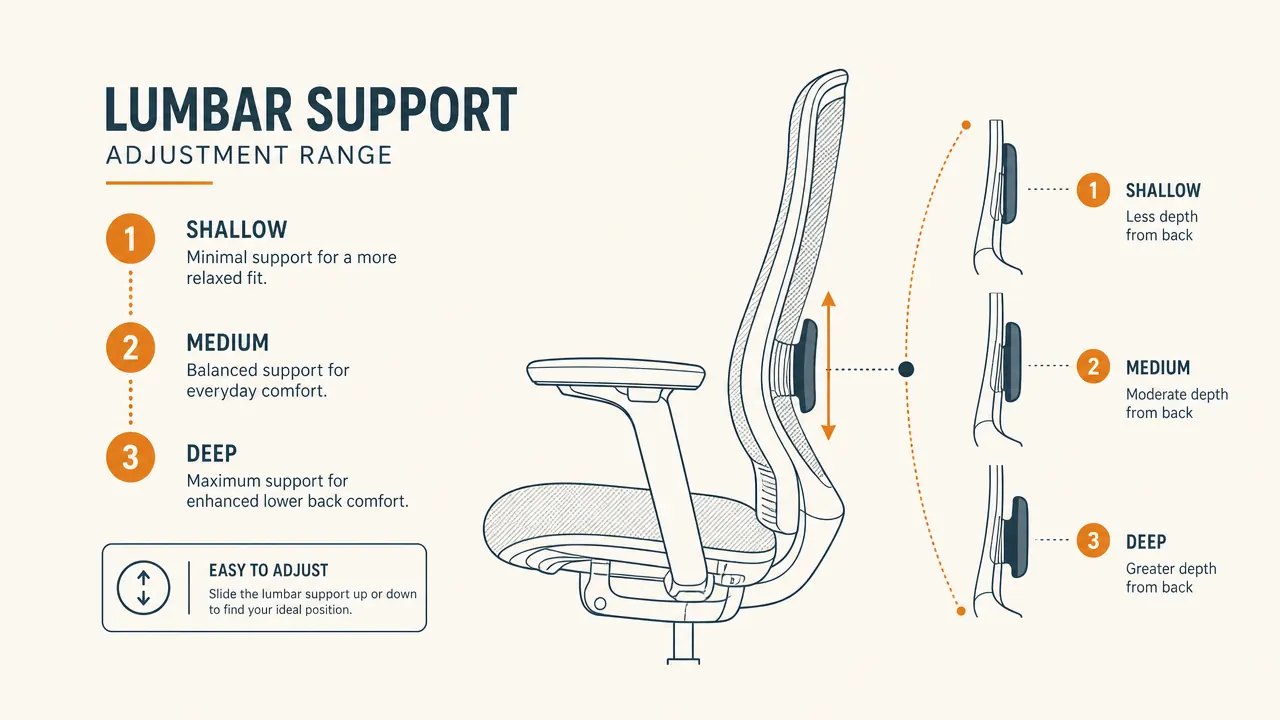
The lumbar unit on the GABRYLLY is a separate piece that attaches to the lower back frame and has a depth-adjustment knob on the left side. At its shallowest setting it provides a mild nudge. At its deepest it pushes noticeably into your lower back. I keep mine at about two-thirds depth, which gives me a constant reminder to stay off my tailbone without feeling like I am being prodded.
The height of the lumbar piece is also adjustable within a range of a few inches. For my torso length, I found the sweet spot at roughly mid-lumbar, right around the L3-L4 region where I usually feel tightness. After six months, the dull afternoon ache I mentioned is mostly gone on days when I stay reasonably consistent about sitting all the way back in the seat. When I slouch forward on a laptop, the support stops helping because I am no longer in contact with it. That is user error, not a chair flaw.
One honest note: the lumbar knob has a slightly plasticky feel compared to the rest of the chair, and after six months of daily turning I can hear a faint click at certain depths. It still works fine and has not slipped out of position on its own. But it is the one component that feels like it might show wear before anything else.
The 3D Armrests After Six Months
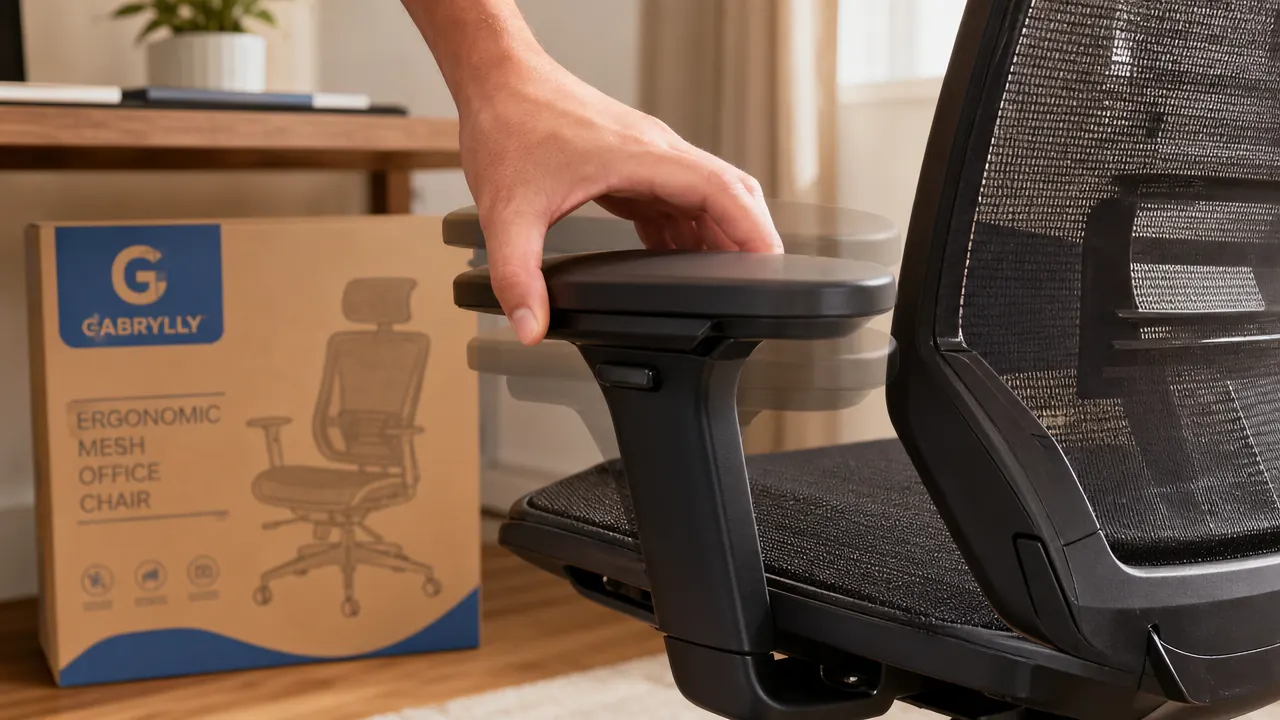
I want to spend time here because armrests are something a lot of chair reviews gloss over. The GABRYLLY armrests adjust in three ways: up and down, forward and back along a short track, and pivot angle from straight to slightly inward. For someone who types at a keyboard that is slightly below desk height on a keyboard tray, the ability to angle the pads inward and push them forward a couple of inches is genuinely useful.
After six months the up-down mechanism is still solid, no wobble. The pivot mechanism has developed the tiniest bit of looseness on the right side, enough that if I lean hard on that arm in a certain direction it shifts by a degree or two. It does not drift on its own and does not affect use. I mention it because in a mid-range chair it is a small disappointment. The padded surfaces themselves, a soft polyurethane, show very light wear along the front edge where my forearms rest most. No cracking or peeling.
After two months the adjustments became second nature and I stopped thinking about the chair. That is roughly the right outcome.
Seat Cushion and Mesh Breathability
The seat cushion is denser than most foam-based chairs. GABRYLLY markets this as supportive, and structurally they are right. It does not compress into nothing after a few months the way softer foam does. But it is a firmer ride than the average chair buyer might expect, and for the first month my sit bones noticed it. If you are coming from a heavily padded executive chair, plan for a two-to-three week adjustment period.
On breathability, the mesh back is legitimately good. My old chair trapped heat through the summer months and I would get up feeling like I had been sitting in a car. The GABRYLLY lets air move across the back, which I did not fully appreciate until we had a warm stretch of weather in March and I noticed I was not reaching for the desk fan the way I used to. The seat itself is not mesh, it is upholstered foam, so the benefit is from the waist up.
The Headrest: The One Thing I Would Change
The headrest is height-adjustable and angle-adjustable. The adjustment mechanism requires pressing a button on the side of the headrest post while moving it up or down, and then it locks in at one of several fixed positions. The angle tilts forward or back with a similar button-and-lock system.
My issue is that for my head position during active work, none of the fixed height positions landed quite right. I use it comfortably when I recline for a call, but when I am forward-focused at a keyboard, my head is not far back enough to actually contact the headrest. This is partly a personal geometry issue, and partly a design choice around the fixed-step locking system rather than a continuous-height track. For someone taller than 5'10", it might land more naturally. For my build it is something I mostly ignore during the core workday.
It does not make the chair bad. But if I were redesigning one thing, I would give it a continuous-slide adjustment instead of the stepped lock.
What I Liked
- Lumbar depth and height adjustment is genuinely functional, not decorative
- 3D armrests reduce shoulder and neck tension noticeably over long days
- Mesh back breathes well, real improvement over upholstered chairs in warm rooms
- Dense seat cushion holds its shape after six months of daily use
- Seat height range accommodates a wide range of desk heights
- Build quality feels solid overall, no wobble in the base or cylinder after 6 months
- 2-year warranty provides reasonable peace of mind at this price
Where It Falls Short
- Seat cushion firmness requires a 2-3 week break-in, uncomfortable for the first couple weeks
- Headrest stepped-lock system does not accommodate all torso and monitor heights well
- Lumbar knob has a slightly cheap feel and developed a faint click over time
- Right armrest pivot has developed minor looseness after heavy daily use
- Assembly instructions rely heavily on diagrams and can be confusing on the lumbar attachment step

Who This Is For
The GABRYLLY is best suited for home office workers who sit six or more hours a day and need genuine lumbar and arm support rather than just an attractive chair. It particularly suits people 5'7" to 6'3" where the lumbar and headrest geometry tends to work well. If your current chair is a padded box that you bought because it looked nice and it is now making your back ache by midday, this is the kind of upgrade that makes a concrete physical difference. People who run hot or work in rooms without great ventilation will also appreciate the mesh back. If you want to compare it side by side against another popular option, my full breakdown is in the GABRYLLY vs FlexiSpot comparison.
Who Should Skip It
If you prefer a plush, heavily cushioned seat and sit for shorter stretches, the firmness of this chair will feel punishing rather than supportive. People under 5'5" may find the lumbar lands a bit high. If you do most of your work reclined with a laptop rather than upright at a keyboard, the lumbar support design rewards an upright posture and will not help much in a reclined position. Also worth knowing: this is a Big and Tall-rated chair with a 400-pound capacity, so the proportions are on the generous side. It does not feel oversized on me at 195 pounds, but lighter or smaller-framed users may feel like they are swimming in the seat. And if back health is on your mind broadly, I also put together a longer piece on the 10 reasons an ergonomic chair actually reduces back pain that might be useful context before you decide.
Six months in, I would buy this chair again. The lumbar support alone is worth the switch from a padded executive chair.
The GABRYLLY ships with free returns and a 2-year warranty. Check today's Amazon price and see which size variant is currently in stock.
Amazon Check Today's Price on Amazon →